What Storm Chasers Don’t Tell You: A Tampa Bay Homeowner’s Post-Claim Reality Check
Published July 25, 2026 · Brandon Roofing · Tampa, FL
Every hurricane season, a second storm follows the first one. This one doesn’t show up on radar — it shows up at your front door.
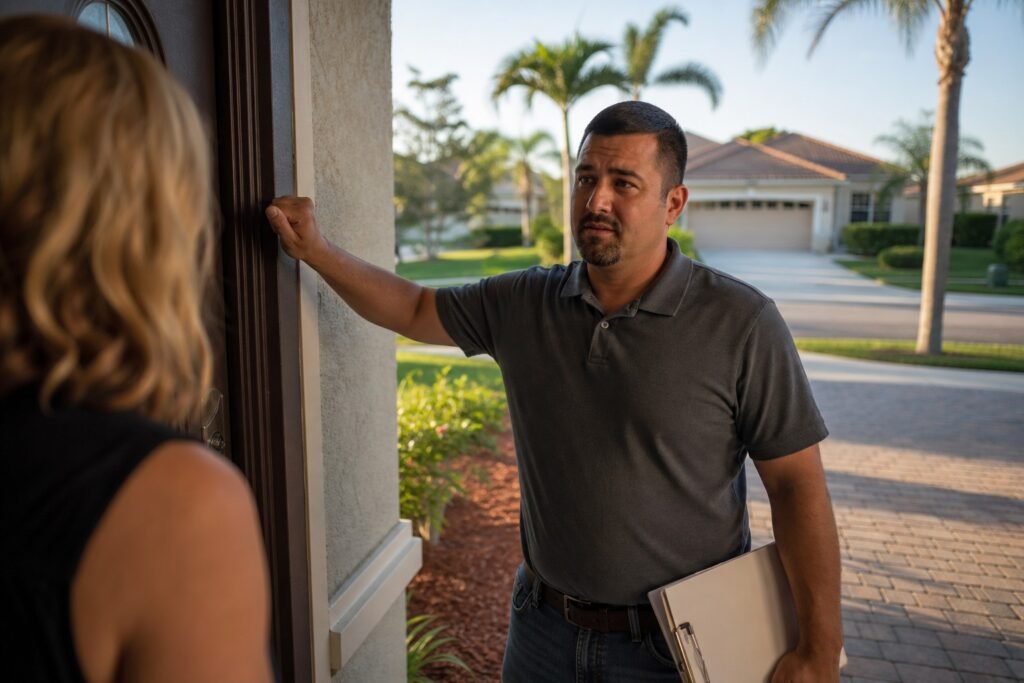
Within hours of any significant weather event in Tampa Bay, out-of-state contractors flood Hillsborough County neighborhoods. They knock on doors, point at roofs, and promise to handle everything — the inspection, the insurance claim, even the paperwork. What they don’t tell you is how the next six months of your life might actually unfold once you sign on the dotted line.
Here’s what Tampa Bay homeowners need to know before, during, and after the post-storm contractor rush.
The Playbook: How Storm Chasers Operate in Tampa Bay
Storm-chasing contractors follow a predictable script. They canvass neighborhoods immediately after a storm — sometimes before the power is even back on. They’ll offer a “free inspection,” climb onto your roof, and come back down with photos of damage that may or may not have been caused by the storm.
Then comes the pitch: sign a contract now, and they’ll handle your insurance claim directly. Some will even offer to waive your deductible — which is illegal under Florida law and a red flag that should end the conversation immediately.
The urgency is manufactured. Legitimate roof damage doesn’t get worse in the 48 hours it takes to get a second opinion. But storm chasers know that homeowners who slow down are homeowners who compare quotes, check licenses, and ask hard questions.
What Actually Goes Wrong After You Sign
The real trouble usually doesn’t start until weeks or months later. Here’s what Tampa Bay homeowners have been dealing with:
Incomplete work with no recourse. In July 2026, a state fraud investigation targeted a Florida contracting company after customers, employees, and subcontractors alleged they were owed nearly $1 million for work that was never finished or paid for. Some homeowners had already paid in full.
Surprise liens on your property. In early 2026, Tampa Bay homeowners who had paid their roofing contractors in full discovered liens on their homes — because the contractor hadn’t paid the subcontractors or material suppliers who did the actual work. Under Florida’s construction lien law, those subcontractors and suppliers can file liens against your property, even though you already paid the general contractor. The Florida Attorney General filed suit against one company and asked a judge to block it from filing additional liens while the case proceeds.
Insurance claim complications. When a contractor handles your insurance claim and the work goes sideways, your insurer can flag you for receiving a payout on work that was never completed. That can complicate future claims and even affect your coverage status.
The Red Flags Every Homeowner Should Recognize
Florida’s Department of Business and Professional Regulation (DBPR) received 4,847 unlicensed contractor complaints in fiscal year 2024–2025 alone, with 2,912 moving forward to formal investigation, according to the DBPR’s Unlicensed Activity Annual Report. The agency also conducted 11 proactive enforcement operations in collaboration with local law enforcement during the same period.
Here’s what to watch for:
- No Florida contractor license. Every roofing contractor must hold a valid state or county license. Verify it in under a minute at MyFloridaLicense.com. If they can’t give you a license number, walk away.
- Pressure to sign immediately. Legitimate contractors expect you to take time, get multiple quotes, and talk to your insurance company first.
- Offering to waive your deductible. This is insurance fraud under Florida law. Any contractor who suggests it is signaling a willingness to cut corners — or worse.
- Demanding a large upfront deposit. Under Florida Statute 489.126, contractors who receive an initial payment exceeding 10 percent of the contract price on a repair or improvement project must apply those funds to the project or return them within specific timeframes. A demand for half the contract price upfront before any permits are pulled is a serious warning sign.
- No written contract or vague scope of work. Florida law requires roofing contracts to include specific disclosures. If the contractor hands you a one-page form with no detailed scope, that’s not a contract — it’s a liability.
- Out-of-state plates and no local address. Storm chasers work through an area and move on. When something goes wrong three months later, there’s no office to visit and no one answers the phone.
How to Protect Yourself at Every Step
Before you sign anything:
- Contact your insurance company first to file your claim. The Florida CFO’s office is clear on this: you should report the claim before you engage a contractor.
- Get at least three written estimates from licensed, local contractors.
- Verify the contractor’s license at MyFloridaLicense.com and check for disciplinary history.
- Ask for proof of insurance — both general liability and workers’ compensation.
Before work begins:
- Get a detailed written contract that includes the full scope of work, materials to be used, timeline, payment schedule, and permit responsibilities.
- Confirm the contractor has pulled the required Hillsborough County permit. You can verify permits through the county’s Development Services portal or by calling (813) 272-5600.
- Ask the contractor to provide a list of subcontractors and material suppliers. If a subcontractor sends you a “Notice to Owner,” don’t ignore it — it’s a legal notification that protects their right to file a lien if they aren’t paid by the general contractor.
After work is completed:
- Don’t make final payment until the work passes the county inspection and you have a copy of the approved permit.
- Get a final lien waiver from the contractor, and request lien waivers from any subcontractors or suppliers.
- Keep copies of every document — contract, permits, inspection results, photos, and payment receipts — for at least five years.
Where to Report a Problem
If you believe you’ve been targeted by a fraudulent or unlicensed contractor in Hillsborough County, you have several options:
- DBPR Unlicensed Activity Hotline: 1-866-532-1440
- Florida Attorney General: MyFloridaLegal.com
- Insurance fraud: FraudFreeFlorida.com
- Hillsborough County Consumer Protection: (813) 903-3430
The Bottom Line
Storm chasers count on urgency, fear, and the chaos that follows severe weather. The best defense is knowing the playbook before a storm hits — so that when someone knocks on your door with a clipboard and a promise, you already know the right questions to ask.
If your roof sustained storm damage, or if you want a professional assessment before hurricane season peaks, call Brandon Roofing at (813) 538-8200 for a free inspection. We’re a licensed, local contractor — and we’ll still be here six months from now.
Disclaimer: This article is for informational purposes only and does not constitute legal advice. Florida statutes and insurance carrier policies are subject to change. Consult a licensed attorney or your insurance agent for guidance specific to your situation.