
How a Tampa Bay Roof Holds Up in a Hurricane
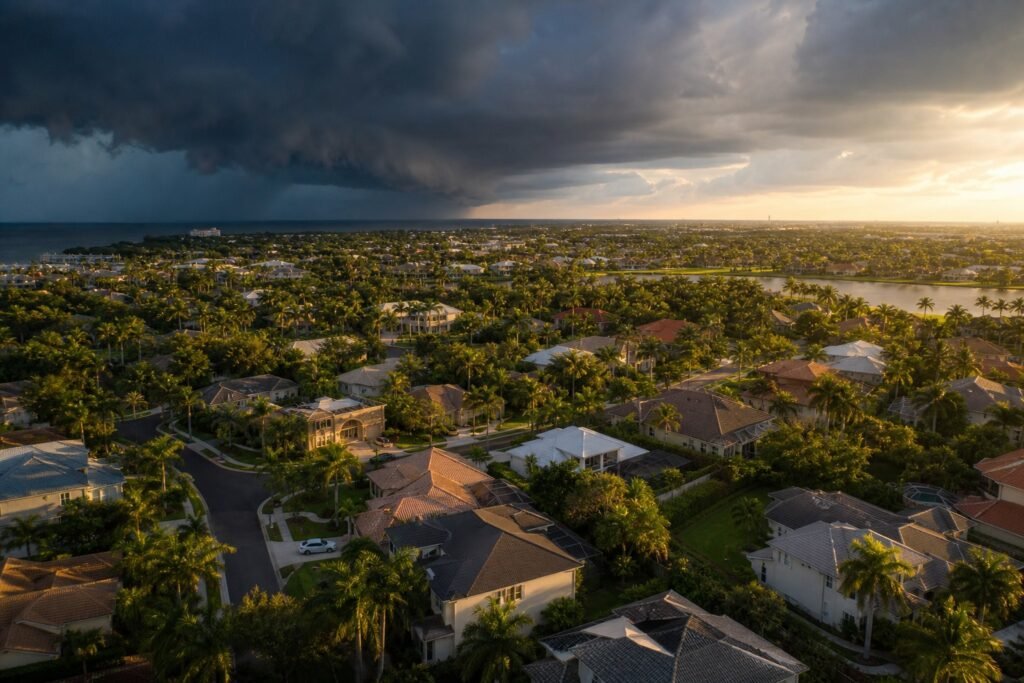
When a hurricane or tropical storm moves across Tampa Bay, the roof takes the first real test. High wind tries to lift edges and corners. Wind-driven rain finds every weak flashing, lifted shingle, and tired underlayment. Debris can strike the surface. Most of the water damage homeowners discover inside the house after a storm started as a roof problem, not as a mysterious leak in the walls.
This is not abstract. Hillsborough, Pinellas, and Pasco houses sit in a region that sees near-daily summer storms and a long official hurricane season from June through November. Many roofs here were built or last replaced in the 1990s and early 2000s. Age, fastening details, and material condition matter as much as the name of the storm on the forecast.
What the wind and rain actually do
Wind does not push equally on every part of a roof. It creates uplift at eaves, ridges, and gable ends. If shingles or tiles are weakly fastened, or if the roof deck is not well connected to the walls, those areas fail first. Once an opening forms, rain driven sideways enters the attic and then the living space.
Even when the field of the roof looks intact from the street, problems often begin at penetrations and transitions: pipe boots, chimneys, valleys, and wall flashings. Those are the same places that leak in ordinary summer thunderstorms — only a named storm presses harder and longer.
Materials, shape, and how the roof is tied down
Material choice affects how a roof behaves in wind and impact, but it is not a magic shield. Asphalt shingles, concrete tile, and metal each have strengths and maintenance needs. What matters for a homeowner is whether the system on your house was installed to the code that applied at the time, whether fasteners and underlayment are still sound, and whether damage from prior seasons was honestly repaired.
Roof shape matters too. Hip roofs (slopes on all sides) generally present less face to the wind than a tall gable end. That does not mean a gable roof cannot be strong; it means the edges and bracing deserve attention. Florida also uses connectors — often called hurricane straps or clips — that help tie the roof structure to the walls. Those details show up in wind-mitigation inspections that insurers review. We will not invent your premium or guarantee a credit; the practical point is that documented construction details are part of how Florida homes are judged after storms and at renewal.
What a homeowner should do next
Before peak season, or after any storm that left stains, missing shingles, or a gut feeling that something shifted, start with condition — not a panic quote.
A useful inspection looks at the roof system with photos and notes you can keep: surface condition by slope, flashings and penetrations, signs of uplift or soft decking, and attic clues when access allows. From there you can decide whether a repair is honest or whether age and damage point toward replacement. Florida’s repair-versus-replace rules and your insurer’s posture may apply; those are facts to document, not promises we invent in an article.
Brandon Roofing is a third-generation, family-owned roofing contractor serving Brandon and greater Tampa Bay. If you want a clear picture of how your roof is set up for wind and rain, request a free inspection or call (813) 538-8200. We will walk what we find in plain English and explain repair versus replacement without a pressure pitch.