
September Is Peak Hurricane Season in Tampa Bay — Here’s What Your Roof Needs Right Now
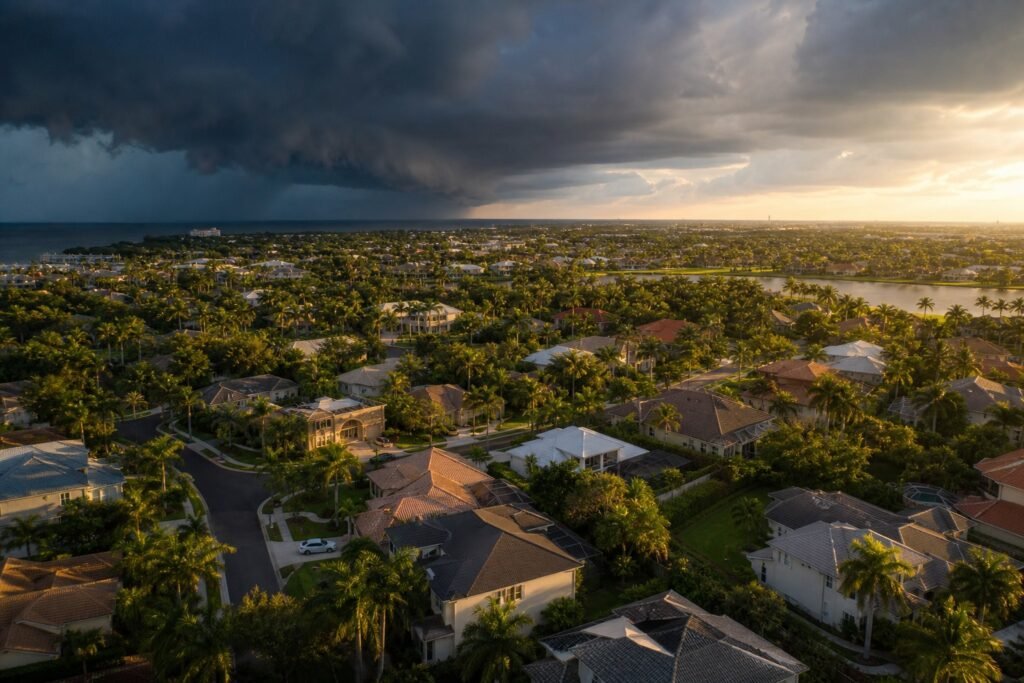
Published September 2, 2026 | Disclaimer: This article provides general information about hurricane preparedness and roofing. It is not a substitute for professional inspection, legal advice, or insurance guidance. Consult a licensed Florida roofing contractor and your insurance provider for decisions specific to your property.
September 10 is the statistical peak of Atlantic hurricane season. It’s the date when sea surface temperatures, atmospheric moisture, and storm-favorable wind patterns all converge at their annual maximum — and historically, 19 major hurricanes have struck Florida’s coastlines during September alone, more than any other month.
For Tampa Bay homeowners, that peak arrives at a tricky moment. The 2026 season has been quiet so far — NOAA’s August update projects below-normal activity (75% probability), with just 7–13 named storms and 2–6 hurricanes expected, driven by El Niño’s wind shear suppression. Only two tropical storms, Arthur and Bertha, have formed to date, both in the Gulf. But “below-normal” doesn’t mean “no risk.” It only takes one storm tracking across the Gulf of Mexico to remind every homeowner between Brandon and Clearwater what September really means.
If you’ve been putting off roof maintenance all summer, this is your final window. Here’s exactly what to check — and what to do if a storm forms while you’re still waiting on repairs.
Why September Changes Everything
June through August, the Atlantic often works against itself. Wind shear disrupts developing systems, the Saharan Air Layer dries out moisture, and storms that do form tend to stay in the open ocean. September strips those barriers away.
The Gulf of Mexico’s water temperatures typically exceed 86°F by early September — well above the 80°F threshold that fuels rapid intensification. The jet stream retreats northward, wind shear drops, and the main development region shifts closer to the Caribbean and Gulf, putting Florida on the front side of any westward-moving system.
For Hillsborough County specifically, the geometry matters. A storm entering the Gulf south of 25°N latitude with a north-northeast track puts Tampa Bay directly in the projected cone. That was the scenario with Hurricane Milton in October 2024, which formed, intensified to Category 5, and made landfall near Siesta Key — all within five days. Tampa Bay took significant storm surge and wind damage even as a near-miss.
The September Roof Checklist for Tampa Bay Homeowners
If you haven’t done a full pre-season inspection, you’re behind — but not out of options. Focus on the items that matter most in the next two to four weeks:
1. Inspect Flashing and Sealant Around Every Penetration
Roof vents, plumbing boots, skylights, satellite dishes, and chimney caps are your weakest points in driving rain. Walk your property and look for cracked rubber boots, lifted flashing edges, or sealant that’s dried and pulled away. In Tampa Bay’s UV and heat cycling, sealant can fail within three to five years. If you see daylight from inside the attic around any penetration, that’s an active vulnerability.
2. Clear Gutters, Downspouts, and Roof Valleys
Clogged gutters during a tropical downpour don’t just overflow — they back water up under your drip edge and into the fascia board. In Hillsborough County’s clay soil, poor drainage also saturates the ground around your foundation. Clean your gutters completely and verify downspouts discharge at least four feet from the foundation. Check roof valleys for debris accumulation, especially if you have overhanging oaks or palms.
3. Trim Trees to a 10-Foot Clearance
Overhanging branches are the number one source of puncture damage during high winds. Florida live oaks, laurel oaks, and slash pines all shed limbs in 60+ mph gusts. If any branch extends within 10 feet of your roof surface, get it cut now — don’t wait until tropical storm watches are issued. Once a watch is posted, tree services book out within hours.
4. Check Your Roof Deck Attachment
This one matters more than most homeowners realize. Under the Florida Building Code 8th Edition (effective January 2024), re-roofing triggers a deck re-nail requirement (EBC 706.7.1): 8d ring-shank nails at 6-inch on-center spacing across the entire deck. If your roof was installed before 2002, your deck attachment likely doesn’t meet current standards — and that’s the connection that fails first in hurricane-force winds. A licensed inspector can evaluate this from the attic without removing shingles.
5. Verify Your Wind Mitigation Form Is Current
Florida’s OIR-B1-1802 wind mitigation inspection form was updated in April 2026 (Rev. 04/26). This form documents your roof’s hurricane resistance features — deck attachment, roof-to-wall connections (clips vs. straps vs. toenails), roof geometry, secondary water barrier, and opening protection. A current wind mitigation report can save Tampa Bay homeowners $800 to $2,200 per year on homeowners insurance, and your insurer may require an updated form at renewal. If your last inspection used an older version of the form, schedule a new one.
6. Document Everything — Before the Storm
Take dated photos and video of your entire roof from ground level and, if safely accessible, from a ladder at the eave line. Photograph each slope, all flashing, every vent, and the condition of your gutters. Store copies in the cloud — not just on your phone. If you file a claim after a storm, these pre-storm images are your strongest evidence that damage was caused by the event, not pre-existing wear. Insurance adjusters in Hillsborough County routinely check for pre-existing conditions, and without documentation, disputes become your word against theirs.
What to Do If a Storm Forms While You’re Waiting on Repairs
Here’s the reality: once a tropical storm or hurricane watch is issued for Tampa Bay, you won’t be scheduling a roofing contractor. Lead times collapse to zero. Materials sell out. Licensed roofers are either securing their own jobs in progress or preparing their own properties.
If you have a known vulnerability — a missing shingle section, a failed pipe boot, exposed underlayment — and a storm is approaching, your options narrow to emergency tarping. A quality 6-mil or thicker polyethylene tarp, secured with 2×4 battens screwed into the deck (not weighted with sandbags or cinder blocks, which become projectiles), can protect a damaged section through a Category 1 or 2 event. Licensed emergency tarping services in Tampa Bay typically respond within 24–48 hours of a watch being issued, but availability drops fast as the storm approaches.
Keep these numbers accessible:
- Hillsborough County Emergency Management: (813) 272-6900
- Hillsborough County HEAT tool: hillsborough.maps.arcgis.com — check your evacuation zone
- Tampa 2026 Hurricane Guide: Available at tampa.gov
The Insurance Side: What Your Policy Actually Covers
Florida homeowners insurance policies have a separate hurricane deductible — typically 2% to 5% of your dwelling coverage. On a $350,000 home, that’s $7,000 to $17,500 out of pocket before your insurer pays anything on a hurricane claim. Know that number now, not after the storm.
Under Florida Statute 627.7011, insurers cannot non-renew your policy solely based on roof age if your roof is under 15 years old. For roofs 15 years or older, the insurer must allow an inspection and cannot non-renew if the roof has five or more years of remaining useful life. But filing a claim on an older roof after a storm can still trigger a full-replacement requirement at renewal — especially with Citizens Property Insurance, which requires full replacement documentation for shingle roofs over 25 years old.
Review your declarations page now. Confirm your dwelling coverage reflects current replacement cost (not market value), verify your hurricane deductible percentage, and check whether you have ordinance-or-law coverage. If your roof is damaged and the county requires a full code-compliant replacement under FBC 8th Edition — including secondary water barrier (R908.7.2) and deck re-nail — ordinance-or-law coverage pays for the code-upgrade portion that a standard policy excludes.
The Bottom Line
A below-normal season doesn’t protect your roof. September’s peak is real whether one storm forms or ten. The homeowners who survive hurricane season without a crisis are the ones who treated August and early September as their final prep window — not the ones who assumed a quiet July meant a quiet fall.
If you’re in Brandon, Riverview, Valrico, or anywhere in Hillsborough County and you haven’t had a professional roof inspection this year, the window is closing. A 30-minute inspection now can prevent a five-figure insurance battle later.
Call Brandon Roofing at (813) 538-8200 to schedule a free pre-storm roof inspection before the September peak arrives.