
What a Tile Roof Really Costs to Own in Tampa Bay Over 20 Years
Published August 31, 2026 · Brandon Roofing, Tampa Bay FL
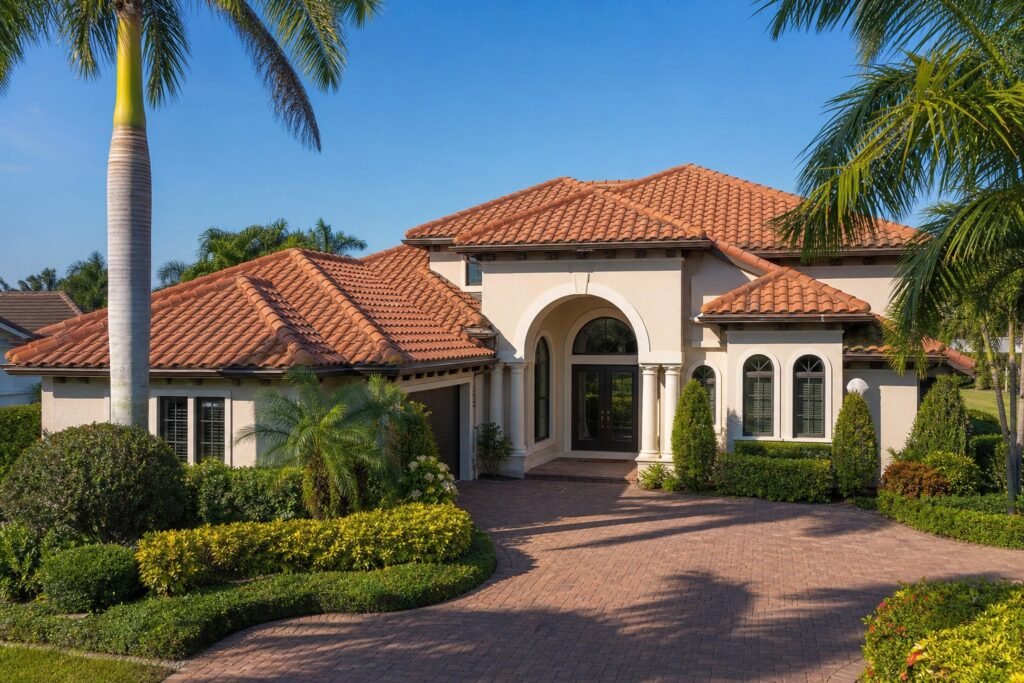
Drive through any established neighborhood in Tampa Bay and you’ll notice something: the homes with concrete tile roofs tend to look the same decade after decade. Meanwhile, the asphalt shingle roofs around them cycle through replacements every 15 to 25 years.
That visual durability is part of tile’s appeal — but durability alone doesn’t answer the question Hillsborough, Pasco and Pinellas County homeowners actually need answered: is a tile roof worth the money over the long haul?
Here’s a realistic, dollar-for-dollar comparison of what a concrete tile roof and an architectural asphalt shingle roof actually cost to own across a 20-year window in Tampa Bay.
The Upfront Gap Is Real
There’s no sugarcoating the installation cost difference. According to 2026 Tampa-area pricing data, a concrete tile roof on a typical 2,000-square-foot home runs roughly $22,000 to $30,000 installed, depending on tile profile, structural requirements, and roof complexity. Clay tile pushes even higher — $30,000 to $44,000 for the same footprint. (BuildPriced, 2026; PinellasRoof, 2026)
An architectural asphalt shingle roof on the same home costs roughly $11,000 to $17,000. (BuildFolio, July 2026)
So on Day One, tile costs roughly twice as much as shingles — sometimes more. That’s the number most homeowners stop at. But Day One is only the beginning of the story.
What Happens at Year 15 — And Year 20
In Tampa Bay’s heat, UV, and rain cycle, asphalt shingles typically last 15 to 25 years, with most architectural-grade products landing around 20 years of functional life. That means if you installed shingles today, you’re likely facing a full tear-off and replacement sometime around 2041 to 2046 — at whatever materials and labor cost the market by then.
A concrete tile roof, on the other hand, lasts 50-plus years. Clay tile can exceed 75 years. The tiles themselves don’t wear out the way shingles do. But the underlayment beneath them — that’s another story.
Florida’s roof-surface temperatures routinely exceed 160°F in summer. That heat degrades the underlayment (whether felt or synthetic) over 20 to 25 years, even while the tiles above remain perfectly sound. (RoofVista, 2026)
An underlayment replacement — where the tiles are carefully removed, the membrane is replaced, and the original tiles are reinstalled — typically runs $8,000 to $12,000 for a Hillsborough County home. (FoxHaven Roofing, 2026) That’s significant, but it’s less than half the cost of a full shingle replacement, and you keep the same tiles.
The 20-Year Cost Comparison
Here’s what the math actually looks like for a 2,000-square-foot Tampa Bay home over 20 years:
Concrete Tile Roof
- Initial installation: ~$26,000
- Underlayment replacement (year 20–25): ~$10,000
- Routine maintenance (cleaning, minor repairs): ~$2,000–$3,000
- 20-year total: ~$36,000–$39,000
- Remaining useful life after year 20: 30+ years
Architectural Asphalt Shingle Roof
- Initial installation: ~$14,000
- Full replacement at year 20: ~$14,000–$18,000 (adjusted for 2046 pricing)
- Routine maintenance and minor repairs: ~$1,500–$2,500
- 20-year total: ~$29,500–$34,500
- Remaining useful life after year 20: starting fresh (another 20 years)
At the 20-year mark, the gap narrows considerably. Tile is still more expensive — but the tile homeowner has a roof that’s only halfway through its life, while the shingle homeowner is back to square one. Stretch the window to 40 years, and tile typically wins outright.
Insurance: Where Tile Quietly Pays You Back
Both tile and properly installed architectural shingles can earn the major wind mitigation credits on Florida’s OIR-B1-1802 form — those credits are driven primarily by deck attachment, roof-to-wall connections, and secondary water resistance, not the covering material itself. (BuildPriced, 2026)
That said, some Florida carriers offer a modest 5 to 10 percent premium reduction for tile roofs based on their superior fire and impact resistance. On a Hillsborough County policy averaging roughly $3,500 per year, that’s $175 to $350 in annual savings — or $3,500 to $7,000 over 20 years. (BuildPriced, 2026)
There’s also a subtler insurance advantage: when your shingle roof hits 15 years, Florida insurers can and do non-renew policies based on roof age under F.S. 627.7011. With a tile roof, the 50-plus-year material lifespan — combined with a documented underlayment replacement — can keep you insurable longer. Some carriers will reset the “roof age” clock based on the underlayment replacement date rather than the original tile installation.
Energy Savings: Modest but Measurable
Tile roofs in Florida provide a measurable cooling advantage. Research from Oak Ridge National Laboratory found that tile roofing reduces peak heat transfer through the roof deck by roughly 70 percent compared to direct-nailed asphalt shingles, thanks to the air gap created by the tile profile. (ORNL/TM-2005/265)
In practical terms, Florida field studies showed that homes with light-colored concrete tile used roughly 22 percent less cooling energy than identical homes with dark asphalt shingles — translating to roughly $100 to $150 in annual energy savings for a typical Tampa Bay home. Over 20 years, that’s another $2,000 to $3,000 in tile’s favor.
Resale: It Depends on Your Neighborhood
This is where tile’s return gets complicated. According to the 2025 Cost vs. Value Report and Florida listing agent surveys, tile roofs recoup 70 percent or more of their cost at resale in neighborhoods where tile is the norm — think South Tampa, parts of Westchase, or older Mediterranean-style communities. (BuildPriced, 2026)
In neighborhoods where shingles dominate — which includes much of Brandon, Riverview, and Valrico — a tile roof may recoup only 30 to 40 percent of its cost premium at sale. The roof will still outlast everything else on the block, but buyers in those markets aren’t necessarily paying a premium for tile when comparable homes have shingles.
Asphalt shingles, by contrast, consistently recoup about 62 percent of replacement cost at resale regardless of neighborhood type.
The Weight Factor Most Homeowners Forget
Before you decide tile is the right move, there’s a structural question. Concrete tile weighs 9 to 12 pounds per square foot — roughly four times the weight of asphalt shingles at 2.5 to 4 pounds per square foot. (Rainier Roofing, 2026)
Most Tampa Bay homes built for shingles aren’t engineered for that load without a structural assessment — and potentially reinforcement. That assessment is required under the Florida Building Code and adds cost and complexity to the project. Lightweight concrete tiles (under 600 pounds per square) are an option for some homes, but they still weigh significantly more than shingles.
The Bottom Line for Tampa Bay Homeowners
A tile roof isn’t a slam-dunk financial win over 20 years — the upfront cost is real, the underlayment still needs replacing, and the resale math depends heavily on your neighborhood. But when you factor in avoided second replacements, insurance advantages, energy savings, and the fact that at year 20 you still have decades of roof life remaining, tile closes the gap faster than most homeowners expect.
The best approach is to run the numbers for your specific situation: your home’s structural capacity, your neighborhood comps, your insurance carrier’s tile treatment, and how long you plan to stay.
Need help figuring out whether tile makes sense for your home? Brandon Roofing provides honest assessments — including structural evaluations — for homeowners across Brandon, Riverview, Valrico, and greater Tampa Bay. Call us at (813) 538-8200 for a free consultation.
Disclaimer: Cost estimates in this article are based on 2026 Tampa Bay market data and may vary based on roof complexity, material selection, and contractor. Insurance savings depend on your carrier and policy. This article is for informational purposes and does not constitute financial or insurance advice.