
Solar Ready Roofing: What Tampa Bay Homeowners Should Know Before Installing Panels
Published August 29, 2026. This article discusses Florida building codes, permits, and contracts. It is for informational purposes only and does not constitute legal or engineering advice. Consult a licensed professional for your specific situation.
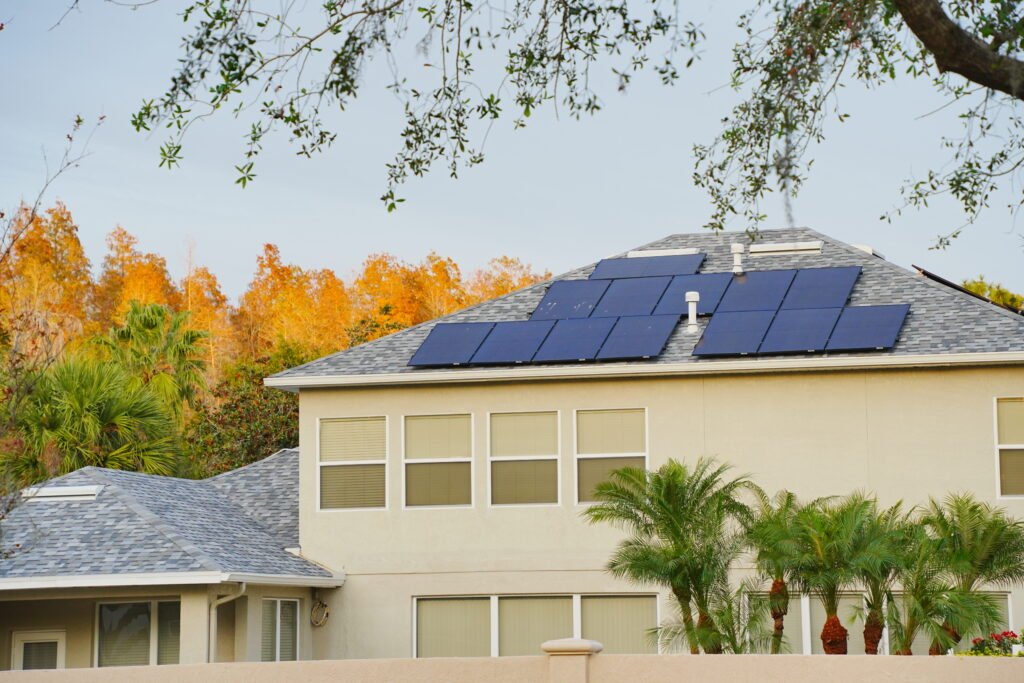
Solar installations are one of the most talked-about home improvements in Florida — but in Hillsborough County, they remain one of the least common. Between April 2019 and March 2026, only 157 out of nearly 70,000 building permits filed in the county were for residential solar — just 0.23% of all permits, according to RemodelTrends permit data. Homeowners filed 45 times more permits for decks and porches than for solar panels in 2025.
There are real reasons for the gap — and the biggest one has nothing to do with sunlight. It’s the roof underneath. If you’re considering solar for your Brandon, Riverview, or Valrico home, the condition and age of your roof is the most important factor most solar salespeople won’t bring up first.
Why Your Roof’s Age Is the First Question — Not the Last
Solar panel systems are designed to last 25 years or more. If your roof has fewer than 10 to 12 years of useful life remaining, installing panels on top of it creates a costly sequencing problem. When the roof fails — and in Tampa Bay’s UV-intensive climate, asphalt shingles often underperform their rated lifespan — you’ll need to pay a licensed solar contractor to remove the entire array, store the equipment, and reinstall it after the reroof is complete.
That remove-and-reinstall process (called a “detach and reset” or solar R&R) adds thousands of dollars to your roof replacement, and the final cost depends on system size, roof type, and whether the existing racking and electrical meet current code. Tile roofs cost more than shingle because tiles must be removed and reset without cracking. Steep or multi-story roofs add labor and safety costs. And if the original installation doesn’t meet current Florida Building Code and National Electrical Code standards, it must be brought into compliance before it goes back up — not simply reinstalled as-is.
The smarter move: if your roof is more than 10 years old, get a professional roof inspection before signing any solar contract. A roofer can estimate remaining useful life and help you decide whether to reroof first, coordinate both projects together, or wait.
What the Florida Building Code Actually Requires
Under FBC Section R324, rooftop-mounted photovoltaic systems must meet specific structural and wind-load requirements:
- Roof load (R324.4.1.1): The roof structure must be designed to support the dead load of the solar panels plus all applicable gravity loads. A licensed engineer must certify this.
- Wind load (R324.4.1.2): Solar panels and their mounting systems must be designed for wind loads per ASCE 7 — critical in Hillsborough County’s wind-borne debris region.
- Setbacks and pathways (R324.6): Fire access pathways and roof-edge setbacks must meet code to allow firefighter access.
- Electrical (NFPA 70 / NEC Article 690): Rapid shutdown, grounding, overcurrent protection, and interconnection must all comply with the current National Electrical Code.
In Hillsborough County, roof-mounted residential solar requires an Electrical Trade permit filed through HillsGovHub. A licensed Florida design professional must provide signed and sealed engineered drawings certifying the roof can support the increased loads. Ground-mounted systems require a separate Residential Miscellaneous permit.
The Sequencing Decision: Reroof First, Solar Second — Or Together
If your roof needs replacement within the next few years, you have three options:
- Reroof first, install solar later. This is the cleanest approach for most homeowners. You start with a roof that has its full warranty intact, and the solar installer works on a known-good surface. The downside: you pay for two separate mobilizations.
- Coordinate both projects simultaneously. A roofing contractor and solar installer work in sequence — tear-off and new roof go on first, solar mounting follows immediately after. This can save time and reduce costs, but requires tight coordination between two licensed contractors.
- Install solar now on an existing roof. Only viable if your roof has at least 12–15 years of remaining useful life. An older roof means you’re betting that it won’t need replacement during the solar system’s payback period.
One important code detail for homeowners who already have solar and need a reroof: Seminole County issued guidance (applicable as best practice across Florida) that solar panels removed during a reroof must meet current code when reinstalled — not the code that was in effect when they were originally installed. That can mean upgraded racking, new rapid-shutdown equipment, or updated wiring. Factor those potential costs into any reroof estimate.
Contract Red Flags Every Tampa Bay Homeowner Should Watch For
A recent WFLX investigation (August 2026) found that some Florida solar salespeople lacked the contractor licenses required under state law — and some contracts were missing mandatory consumer disclosures. Door-to-door solar sales have left homeowners with decades of debt, malfunctioning systems, and power bills that never went away.
Florida Statute 520.23 requires that every solar sale or lease agreement include specific written disclosures in at least 12-point type, separately acknowledged by the buyer. Key protections include:
- 3-business-day right to rescind after signing (F.S. 520.23(13))
- Ownership and transferability of any tax credits, rebates, or renewable energy certificates (F.S. 520.23(16))
- Full system specifications, projected energy production, and financing terms
Before signing anything, verify the installer’s license through the DBPR Verify a Licensee tool. Look for an active EC (Electrical Contractor) or solar-specific license. If a salesperson can’t provide their company’s license number on the spot, that’s a red flag.
Also note: the federal Section 25C and 25D energy tax credits were terminated by federal legislation in July 2025. There is no federal tax credit available for solar systems installed in 2026. Any salesperson claiming otherwise is providing inaccurate information.
What to Do Before You Call a Solar Company
If you’re a homeowner in Brandon, Riverview, Valrico, or anywhere in Hillsborough, Pinellas or Pasco counties considering solar panels, start with the roof — not the panels:
- Get an independent roof inspection. Know your roof’s age, condition, and estimated remaining life before talking to any solar company. A solar salesperson is not a roofing expert.
- Check your roof’s structural capacity. Not every roof deck can support the added dead load of a solar array. An engineer’s certification is required by code — make sure it’s part of the plan.
- Understand the permit process. Hillsborough, Pasco and Pinellas counties require engineered drawings, an Electrical Trade permit, and inspections. Any installer who suggests shortcuts is one to avoid.
- Read the contract carefully. Confirm the 3-day cancellation clause is present, verify all financial projections, and understand exactly who owns the system and any associated credits.
- Sequence the work correctly. If your roof needs replacement within the next decade, do that first. The cost of a solar R&R later will eat into your energy savings.
Brandon Roofing provides free roof inspections for homeowners considering solar installations and works with highly regarded solar companies like Solar22. We’ll give you an honest assessment of your roof’s remaining life, structural condition, and what — if anything — needs to happen before panels go up. Call us at (813) 538-8200 to schedule yours.