
5 Signs Your Tampa Bay Roof Won’t Survive Another Hurricane Season
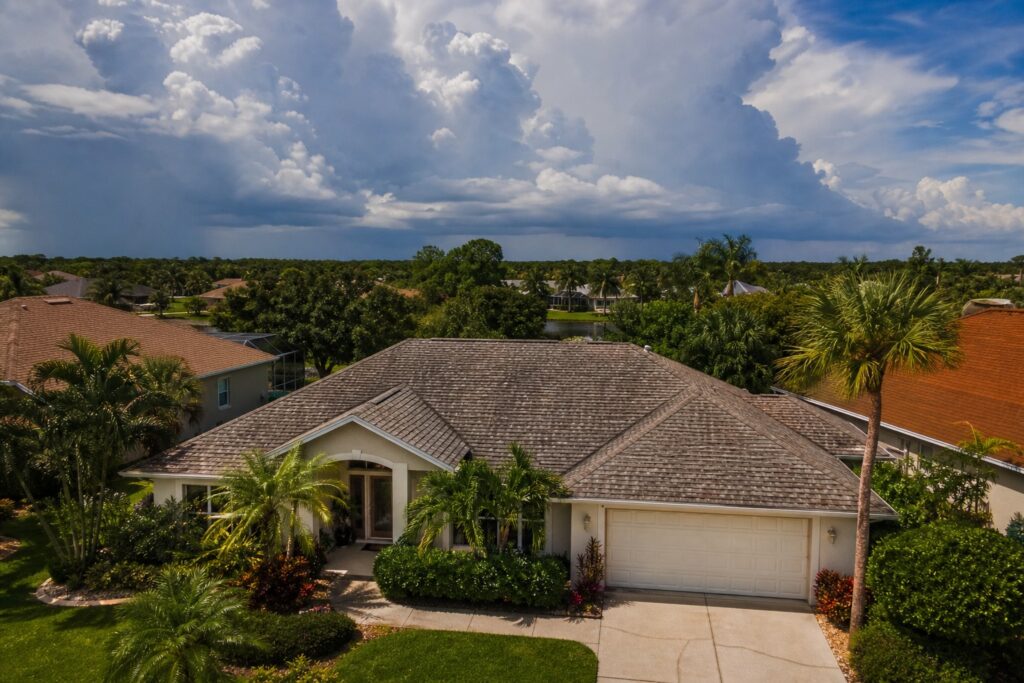
Hurricane season is here, and if you’re a homeowner in Brandon, Riverview, or Valrico, the question isn’t whether a storm will test your roof — it’s whether your roof is ready for it. The good news: you don’t need to climb a ladder to spot the warning signs. Here are five things you can check from the ground that tell you whether your roof is prepared for another season — or on borrowed time.
1. Curling or Buckling Shingles
Stand in your yard and look at your roofline. Healthy shingles lay flat against the roof deck. If you see edges lifting upward, creating a concave curve, or shingles pushing up in the middle like a ridge, your roof is telling you something important.
In Hillsborough County, summer roof surface temperatures regularly exceed 160°F. That constant cycle of heating and cooling causes the asphalt to dry out and shrink, warping the shingle material over time. Once shingles curl, they can’t shed water properly — and during a tropical storm, those lifted edges act like sails. Wind gets underneath and peels them off in sheets.
Repair or replace? If curling is limited to one small section — say, a few shingles near a vent or ridge — a targeted repair may buy you time. But if you see curling across multiple areas or an entire slope, the shingles have reached end of life. No amount of patching changes the underlying material failure. That’s a replacement conversation.
2. Granule Loss in Your Gutters
After a heavy Tampa Bay afternoon thunderstorm, check your gutter downspouts. If you see accumulations of dark, coarse, sand-like material — that’s granule runoff. Those granules are your shingles’ sunscreen. They protect the underlying asphalt from Florida’s intense UV exposure. When they’re gone, the asphalt deteriorates rapidly.
Some granule loss is normal in the first year after installation. But on a roof that’s 10 or more years old, consistent granule accumulation means the protective layer is failing. From the ground, you’ll notice affected shingles look darker, shinier, or unevenly colored compared to surrounding areas.
Repair or replace? Moderate granule loss on a roof under 12 years old is worth monitoring — take photos every few months and compare. But widespread granule loss on a roof 15 years or older, especially heading into hurricane season, means the shingles have lost their ability to protect your home. According to insurance industry data, roofs older than 20 years in Florida are associated with claims that are 50–100% more severe compared to roofs under five years old. If your roof is in that range and shedding granules, replacement before the season peaks in August and September is the smart move.
3. A Sagging Roofline
This is the one that should stop you in your tracks. Stand across the street and look at your roofline from a distance. It should be straight and level. If you see a visible dip, sag, or wave — particularly between the ridge and the eave — that’s a structural concern.
Sagging typically means moisture has compromised the roof decking or the support structure underneath. In Brandon’s humidity, even a small, slow leak can saturate plywood decking over time, causing it to soften and warp. Left alone, a sagging section can eventually collapse, especially under the weight of wind-driven rain during a hurricane.
Repair or replace? A sagging roof is almost never a repair situation. It means the problem has gone well beyond the shingles into the decking or framing. You’ll likely need decking replacement at minimum, and in most cases, a full reroof is the only responsible option. If you see sagging, call a licensed contractor before doing anything else — and don’t wait until a named storm is in the Gulf.
4. Damaged or Missing Flashing
Flashing is the metal material installed wherever your roof meets a wall, a chimney, a vent pipe, or a valley where two roof slopes come together. It’s the unsung hero of your roof’s waterproofing system — and in Tampa Bay’s climate, it’s often the first thing to fail.
From the ground, look for gaps where flashing has pulled away from the surface, visible rust or corrosion, or sections that appear bent or lifted. Hillsborough County’s daily thermal cycling — scorching afternoons followed by rapid cooling from evening thunderstorms — causes metal flashing to expand and contract constantly. Over the years, that movement loosens the seal and creates entry points for water.
Repair or replace? Flashing damage is one of the few roof issues that’s genuinely repairable on an otherwise healthy roof. A qualified roofer can replace a section of flashing, reseal joints, and restore the waterproof barrier. However, if the flashing failure has allowed water intrusion long enough to damage the underlayment or decking beneath it, the repair scope expands quickly. If your roof is already 15+ years old and the flashing is compromised in multiple locations, factor it into a broader replacement decision.
5. Water Stains on Interior Ceilings or Walls
This one you’ll notice from inside your home. Brown or yellowish stains on your ceiling — especially near exterior walls, around skylights, or in upstairs closets — mean water is getting through your roof and into your living space. In some Brandon homes, you’ll also notice peeling paint, bubbling drywall, or a musty smell in rooms directly below the attic.
Interior water stains don’t always mean the leak is directly above the stain. Water can travel along rafters and sheathing before it drips down, sometimes appearing feet away from the actual entry point. That’s what makes interior leaks tricky — and why they need professional diagnosis.
Repair or replace? A single, recent stain from a known event — a branch impact, a clogged gutter overflow — can often be traced and repaired. But recurring stains, multiple stain locations, or stains that reappear after a repair point to a systemic failure. If your attic inspection reveals mold, rotted decking, or saturated insulation, you’re past repair territory. The National Roofing Contractors Association recommends full replacement when three or more warning signs appear simultaneously, because addressing individual symptoms without systemic replacement typically costs two to three times more over a five-year period.
What Brandon Homeowners Should Do Right Now
You don’t need a professional to walk your property and look for these five signs. Grab your phone, take photos from multiple angles, and check your gutters after the next rainstorm. If you spot one or two issues, get a professional inspection scheduled — the earlier in the season, the better. Contractor calendars in Hillsborough County fill up fast once the first tropical system enters the Gulf.
If you see three or more of these signs, it’s time for a serious conversation about replacement. Waiting another season with a compromised roof isn’t just a gamble on property damage — it’s a gamble on your insurance coverage. Florida carriers are increasingly non-renewing policies on roofs over 15 years old, and a claim filed on a roof with documented pre-existing damage can get complicated fast.
Brandon Roofing offers free roof inspections for homeowners in Brandon, Riverview, Valrico, and throughout Hillsborough County. If your roof is showing any of these signs, call us at (813) 538-8200 before the season’s peak — and before the contractor rush makes scheduling a challenge.