
Solar Panels Are Going Up Across Tampa Bay — Here’s What That Means for Your Roof and Your Insurance
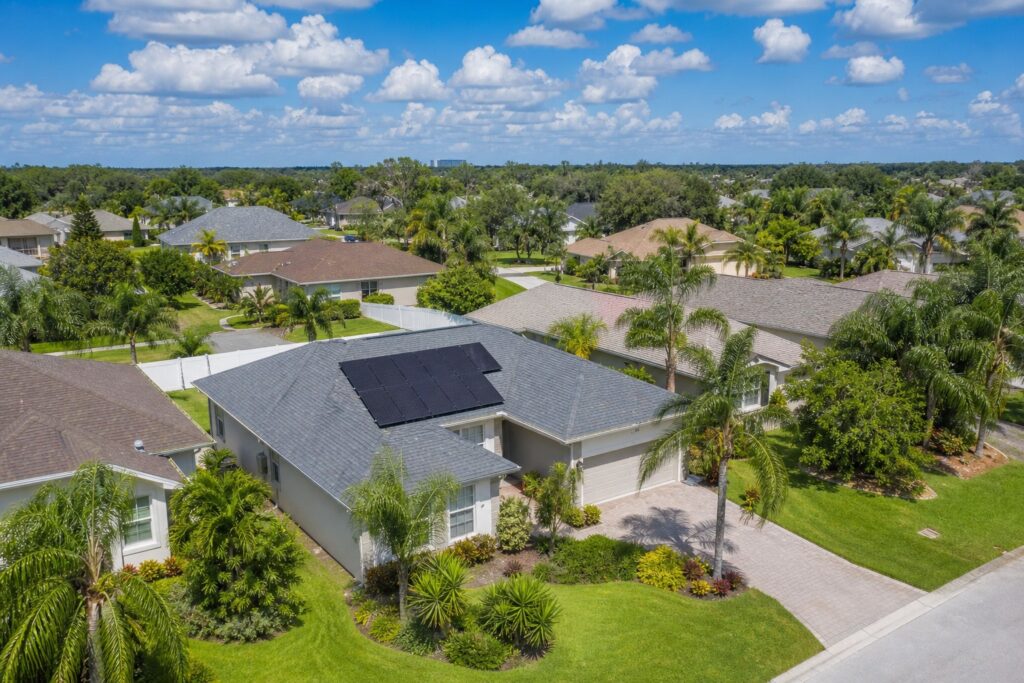
Solar panels are appearing on rooftops across Tampa Bay at a pace that would have seemed unlikely just five years ago. Florida now ranks second in the nation for residential solar installations, and Hillsborough County is riding that wave. But as panels go up on homes throughout Brandon, Riverview, and Valrico, a quieter conversation is happening — one about what those installations mean for the roofs underneath them, the insurance policies covering them, and the neighbors living next door.
Whether you’re watching a crew bolt panels to the house across the street or considering solar for your own home, there are things every Hillsborough County homeowner should understand about the intersection of solar energy, roof integrity, and insurance risk.
What Solar Panels Actually Do to a Roof
Modern solar panels add roughly 2.5 to 4 pounds per square foot of dead load to your roof structure. That may not sound like much, but Florida’s building code requires that a licensed structural engineer — or the racking manufacturer’s stamped engineering documents — verify that your existing roof framing can handle the additional weight. This is especially important in hurricane-prone Hillsborough County, where mounting systems must be engineered to withstand the wind loads specified under ASCE 7-16 standards.
Every panel mount requires roof penetrations — bolts that go through the roofing material and into the decking or rafters. Each penetration is a potential leak point if not properly sealed with engineered flashing. In Tampa Bay’s relentless humidity and torrential summer rains, even a minor flashing failure can lead to water intrusion, deck rot, and mold growth long before you notice a ceiling stain.
There’s also the fire safety dimension. The National Electrical Code (NEC 690.12) now requires rapid shutdown systems on all rooftop solar installations. These module-level shutdown devices allow firefighters to de-energize panels quickly, which is critical because a solar array can produce dangerous voltage even during a fire. In Hillsborough County, inspectors check for rapid shutdown compliance during the permitting process.
The Insurance Conversation Nobody’s Having
Here’s where things get complicated for Tampa Bay homeowners. Most Florida insurance carriers consider rooftop solar panels part of your dwelling once they’re permanently attached, meaning they fall under Coverage A — the same category as your roof, walls, and foundation. In theory, that’s good: your panels are covered against hurricanes, hail, lightning, and fire.
In practice, it’s more nuanced. Some carriers exclude solar panels entirely. Others require a separate solar endorsement that increases your premium. And a few will write the policy but apply your hurricane deductible — which in Florida is typically 2% to 5% of the dwelling value — to any storm-related solar claim.
The biggest insurance landmine? Installing solar on an aging roof. Most Florida carriers will not write or renew a policy for a home with a roof older than 10 to 15 years. If you bolt a $25,000 solar system onto a 12-year-old asphalt shingle roof, you’re creating an insurance nightmare. The carrier sees a future roof replacement where they’d have to pay for the removal and reinstallation of your entire solar array — a cost that runs $5,000 to $10,000 — and they’d rather non-renew you than absorb that risk.
If you fail to notify your insurer about a solar installation, the consequences are even worse: denied claims or outright policy cancellation.
What Your Neighbor’s Panels Mean for You
So your neighbor installed solar. Should you be concerned? The honest answer is: probably not, but it’s worth paying attention.
A neighbor’s solar installation doesn’t directly affect your roof or your insurance policy. However, there are a few indirect considerations worth knowing about:
- Property values: Florida law (Statute 193.624) exempts solar installations from property tax assessments, so your neighbor’s panels won’t push up your tax bill. National studies consistently show that solar installations either have no measurable impact on adjacent property values or slightly positive ones.
- Construction activity: During installation, your neighbor’s property will see roofing crews, electrical work, and permitting inspections. If the installer’s crew damages any shared fence line, landscaping, or property, that’s a standard liability issue — check that the contractor carries proper insurance.
- Neighborhood momentum: In many Brandon and Riverview subdivisions, one solar installation triggers a wave of interest. If you’re considering panels, your neighbor’s experience can be valuable intelligence on local installers, permitting timelines through Hillsborough County, and real-world performance data.
The 15-Year Rule: Replace the Roof First
If you’re thinking about going solar yourself, the single most important question is: how old is your roof?
The industry’s standard guidance — and the first question most reputable Florida solar installers will ask — is whether your roof is 15 years or older. If it is, replacing the roof before installing solar is almost always the smarter financial move. Here’s the math:
- A typical asphalt shingle reroof for a 2,000 square foot home in Hillsborough County runs $8,000 to $14,000.
- If you skip the reroof and install solar on an aging roof, you’ll eventually need to pay $5,000 to $10,000 to remove, store, and reinstall your panels when the roof finally needs replacement — and some panel warranties may be voided in the process.
- Bundling the roof replacement and solar installation into one project typically saves $2,500 to $5,000 compared to doing them separately.
For homes with tile roofs — common in newer Hillsborough County developments — the calculus changes because tile can last 30 to 50 years. But tile installations require specialized tile hooks that add $500 to $1,500 to the solar installation cost, and cracked tiles must be addressed before mounting.
Hillsborough County Permits and What to Expect
Every residential solar installation in Hillsborough County requires a permit. For roof-mounted systems, you’ll apply for an Electrical Trade permit through HillsGovHub. The application requires digitally signed and sealed plans by a Florida-licensed design professional confirming that the building can support the additional loads and meets all Florida Building Code requirements.
You’ll also need a recorded Notice of Commencement before the first inspection, per Florida Statute 713.13. If you’re acting as your own contractor (which Florida allows for owner-occupied residential properties), you’ll need to complete an Owner Builder Disclosure Statement. Most homeowners work with licensed solar installers who handle the permitting process, but it’s worth understanding what’s being filed on your behalf.
Hillsborough County Development Services can answer specific permitting questions at (813) 272-5600.
What to Do Before You Sign Anything
If solar panels are in your future, take these steps first:
- Get a professional roof inspection. Know exactly how many years of life your roof has left. If it’s under 10 years, you need a new roof before panels go up.
- Call your insurance carrier. Ask specifically how a solar installation affects your policy, your premium, and your coverage limits. Get the answer in writing.
- Verify the installer’s credentials. Florida requires a licensed electrical contractor (EC or ER license) for residential solar. Check their license through the DBPR license lookup and confirm they carry liability and workers’ compensation insurance.
- Understand all the warranties. You should receive a product warranty (10–25 years), a performance warranty (typically 80–90% output after 25–30 years), and a workmanship warranty from the installer (1–10 years). Florida law mandates a minimum one-year workmanship warranty.
- Sequence the project. If you need both a roof and solar, do them together with a single general contractor or a coordinated pair. This saves money, preserves warranties, and ensures the mounting system is integrated properly.
Solar energy makes tremendous sense for many Tampa Bay homeowners. Florida’s abundant sunshine, the federal tax credit, and the state’s property tax and sales tax exemptions make the economics compelling. But those economics only work when the roof underneath is sound, the insurance is sorted out, and the installation meets Florida’s demanding building code standards.
If you’re not sure about the condition of your roof — whether you’re thinking about solar or just want peace of mind heading into hurricane season — call Brandon Roofing at (813) 538-8200 for a free inspection. We’ll tell you exactly where your roof stands and what makes sense for your situation.
Published June 24, 2026. Solar installation regulations, insurance requirements, and tax incentives change frequently. Verify current requirements with your installer, insurer, and Hillsborough County before making decisions.