
Why Florida Homes Need Roofing Designed for Heat, Humidity, and Storms
Florida’s climate is unlike anywhere else in the country. Homes here face relentless sun, year-round humidity, intense rain, and the constant threat of tropical storms and hurricanes. Because of this, roofing systems that perform well in other states often struggle in Florida.
A roof designed specifically for Florida’s conditions isn’t a luxury—it’s a necessity.
Extreme Heat Takes a Constant Toll on Roofs
Florida roofs are exposed to intense UV radiation almost every day of the year. Over time, heat causes roofing materials to expand, contract, and deteriorate.
Common heat-related issues include:
- Shingle cracking and curling
- Accelerated material aging
- Granule loss on asphalt shingles
- Increased attic temperatures
Roofing systems designed for Florida use materials and installation methods that better tolerate prolonged heat exposure and reduce stress on the roof structure.
Humidity Creates Hidden Roofing Problems
Humidity is one of the most underestimated threats to a roofing system.
In Florida, warm, moist air can become trapped in attics, leading to:
- Condensation buildup
- Mold and mildew growth
- Wood rot in decking and framing
- Reduced insulation performance
Proper roof ventilation and moisture-resistant underlayment are critical in managing humidity and protecting the home from long-term structural damage.
Heavy Rain Demands Superior Water Management
Florida rainstorms can dump large volumes of water in a short period of time. A roofing system must be able to move water quickly and efficiently.
Roofing designs suited for Florida emphasize:
- Effective roof pitch and drainage
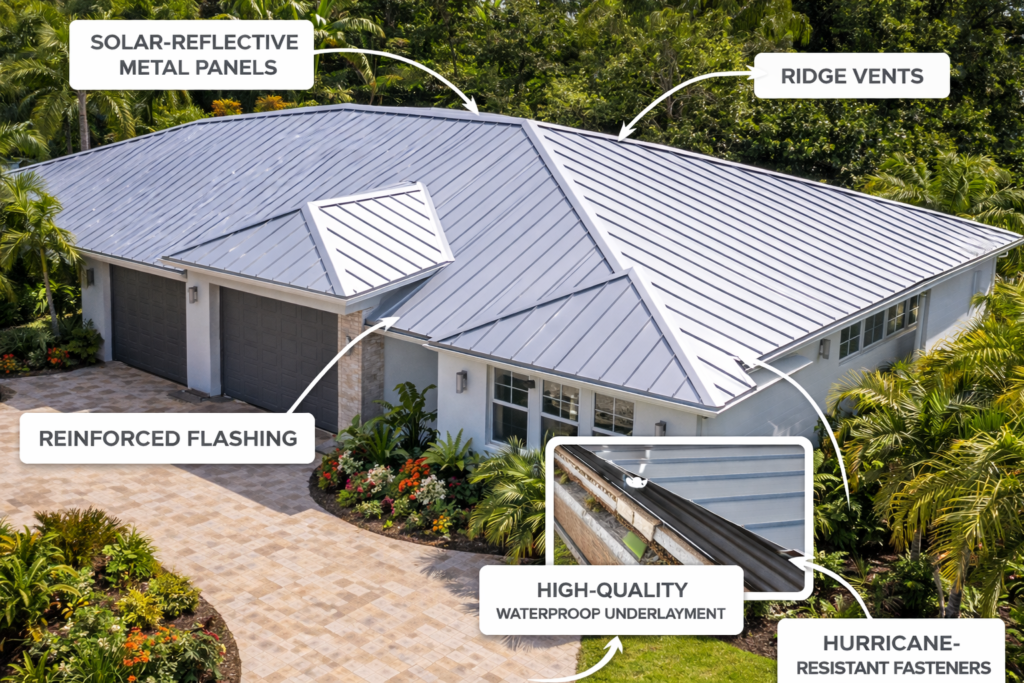
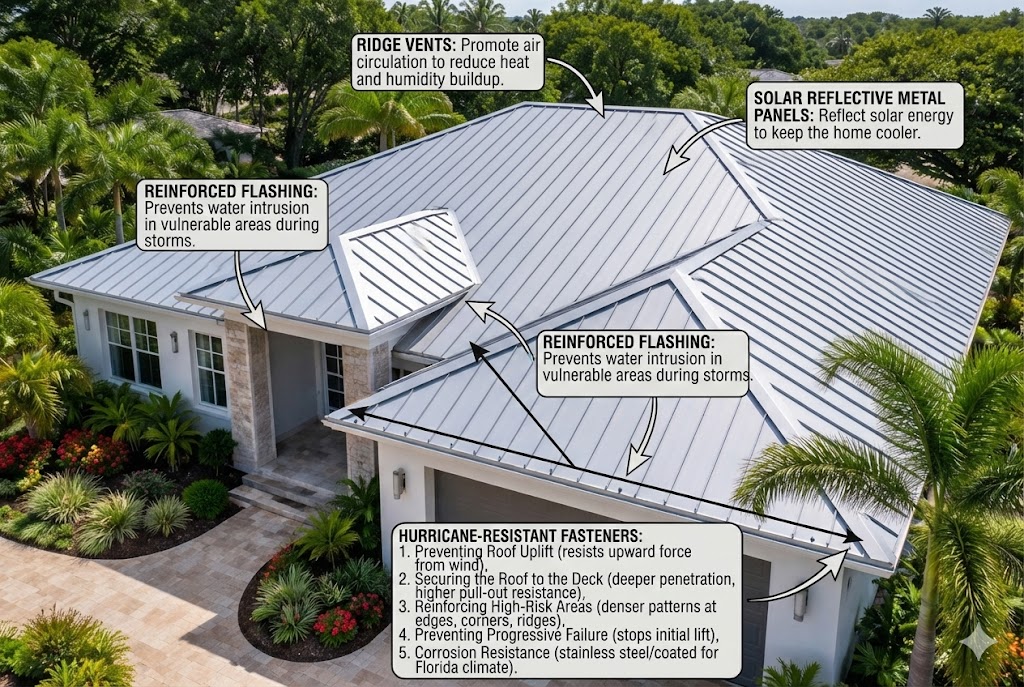
- High-quality underlayment as a secondary water barrier
- Proper flashing around penetrations and transitions
- Seam and fastener systems that resist water intrusion
When water management fails, leaks often appear in places homeowners don’t expect—sometimes long after the rain stops.
Storms and Wind Require Stronger Attachment Systems
Wind is one of the most destructive forces acting on a roof during storms.
Florida roofing standards now focus heavily on:
- Enhanced fastening patterns
- Secure roof-to-deck attachment
- Reinforced edges, ridges, and corners
- Materials rated for high wind uplift
Roofs designed for storm resistance are less likely to experience catastrophic failure, even when wind speeds increase suddenly.
Roofing Is a System, Not Just a Surface
One of the most important lessons learned from decades of Florida storms is that roofing performance depends on the entire system—not just the visible material.
A Florida-appropriate roofing system includes:
- Durable roof covering
- High-performance underlayment
- Proper ventilation
- Quality flashing and sealing
- Correct installation techniques
When one component fails, it can compromise the entire roof.
Energy Efficiency Matters More in Florida
Because air conditioning is used year-round, roofing plays a major role in energy efficiency.
Roofing systems designed for Florida often:
- Reflect more solar heat
- Reduce attic temperatures
- Improve indoor comfort
- Lower cooling costs
These benefits compound over time, making roofing choices part of a home’s long-term operating cost.
Why One-Size-Fits-All Roofing Doesn’t Work Here
Roofing systems designed for cooler or drier climates may meet minimum requirements but fail prematurely in Florida.
Florida homes need roofing that:
- Handles prolonged heat exposure
- Manages moisture effectively
- Resists wind uplift
- Performs under extreme weather events
This is why local experience and climate-specific knowledge matter when choosing materials and installation methods.
The Long-Term Value of Climate-Appropriate Roofing
A roof designed for Florida’s climate:
- Lasts longer
- Requires fewer repairs
- Improves insurability
- Protects home value
- Provides peace of mind during storm season
It’s not just about surviving the next storm—it’s about long-term performance in a demanding environment.
Roofing Designed for Heat
Florida’s heat, humidity, and storms place unique demands on every roof. Homes that use roofing systems designed specifically for these conditions are better protected, more comfortable, and more resilient over time.
Choosing the right roofing system isn’t just about aesthetics or cost—it’s about designing for the realities of living in Florida.