
Florida Building Code Update
Changes Affect Your Next Roof Replacement
If you’re planning a roof replacement in Brandon, Riverview, or Valrico this year, the rules have changed — and not in small ways. The Florida Building Code 8th Edition, which took effect on December 31, 2023, introduced the most significant overhaul to residential roofing standards in over a decade. Whether you’re replacing an aging roof to satisfy your insurance carrier or upgrading after storm damage, every permit pulled in Hillsborough County in 2026 must meet these updated requirements.
Here’s what the changes actually mean for your next roofing project — in plain English.
Two Layers of Underlayment Are Now Standard
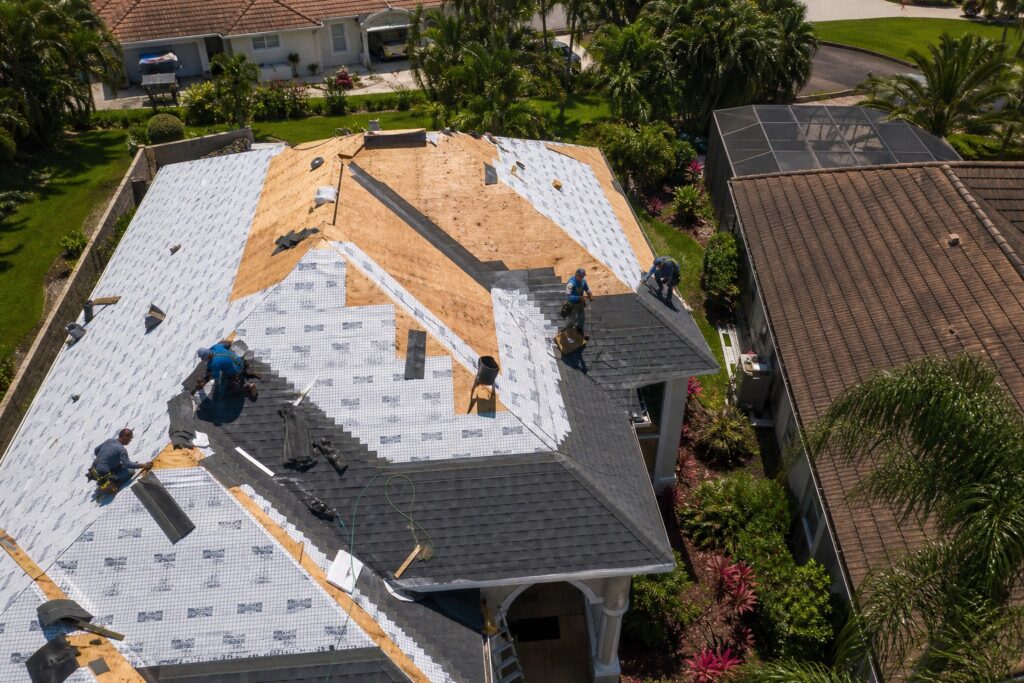
The biggest material change in the 8th Edition is the underlayment requirement. Previously, a single layer of approved underlayment was common practice for many residential roofing installations. Under the current code, two layers of underlayment are now required for asphalt shingles, metal roof panels, mineral-surfaced roll roofing, and slate.
The underlayment must meet specific ASTM standards — D226 Type II, D4869 Type III or IV, or D8257. The installation method is also prescribed in detail: the first course is a half-width strip starting at the eaves, followed by full sheets overlapping each successive course by half the sheet width plus two inches. End laps must be six inches and offset by six feet.
For Brandon homeowners, this means your roofing contractor will use more material and more labor time on the underlayment phase alone. Expect this to add a few hundred dollars to your total project cost — but the payoff is real. That second layer of protection is what stands between your home’s interior and water damage when a hurricane strips away your shingles.
There’s also a new rule about drip edge placement: all mechanically fastened underlayment must now be installed under the drip edge at both rakes and eaves. This change was made to reduce wind uplift on the underlayment during high-wind events — a direct response to damage patterns observed after recent hurricanes.
Nailing Patterns Got Stricter
Hillsborough County falls within Florida’s high-wind zone, which means enhanced nailing requirements apply to every residential roof replacement here. Under the 8th Edition, here’s what inspectors are looking for:
- Roof deck attachment: 8d ring-shank nails (minimum 2.5 inches long), spaced 4 inches on center at panel edges and 6 inches on center in the field. Near gable ends and within 4 feet of hips and ridges, edge spacing tightens to 3 inches on center.
- Shingle fastening: Six nails per shingle strip in high-wind areas — up from four nails in standard wind zones. Nails must be corrosion-resistant, minimum 12-gauge with a 3/8-inch head diameter.
- Underlayment fastening: Corrosion-resistant annular ring or deformed shank nails with metal or plastic caps (minimum 1-inch diameter), spaced no more than 12 inches on center between side laps and 6 inches on center at end and side laps.
These aren’t suggestions — they’re what the Hillsborough County inspector will verify during your progress check and final inspection. If your contractor isn’t following the 8th Edition nailing schedule, the inspection will fail.
The 25% Rule Still Applies — But Not to Everyone
One of the most confusing aspects of Florida roofing code is the 25% replacement rule, and it’s still in effect under the 8th Edition. Here’s how it works in Hillsborough County:
- If your roof was built or replaced before March 1, 2009 (prior to the 2007 FBC), and more than 25% of the total roof area is damaged, you’re required to replace the entire roof to current code — not just patch the damaged section.
- If your roof was built or replaced after March 1, 2009, you only need to bring the repaired portion up to current code, regardless of how much area is affected.
This matters more than most Brandon homeowners realize. If you have a pre-2009 roof with moderate storm damage, a partial repair isn’t an option under the code. Your contractor should know this, but not all of them will tell you upfront — especially if they’re trying to keep the quote low.
The New Wind Mitigation Form Changes How Credits Are Verified
Starting April 1, 2026, Florida’s Office of Insurance Regulation rolled out an updated wind mitigation inspection form — the OIR-B1-1802 (Rev. 04/26). If you’re getting a new roof this year, this change directly affects the insurance savings you can expect afterward.
The updated form requires more detailed documentation than ever before, including permit dates, product approval numbers, and specific installation verification. New sections cover FORTIFIED Home™ designations, roof slope classification, and regional wind zone data. Inspectors will need clearer photo evidence and permit records for every credit category.
For Hillsborough County homeowners getting a new roof in 2026, the key credits remain the same — but documentation matters more:
- Roof-to-wall connections (hurricane clips or straps): 15–25% off the wind portion of your premium
- Hip roof geometry (90%+ of perimeter hipped): Up to approximately 32% off the wind portion
- Secondary water resistance (sealed roof deck): 15–25% off the wind portion
- Full opening protection (impact windows, rated shutters): 15–45% off the wind portion
A comprehensive wind mitigation package on a new roof can save a Brandon homeowner 25–45% on the windstorm portion of their annual premium. On a $5,000 windstorm premium, that’s $1,250 to $2,250 per year — savings that compound over the life of the roof.
Pro tip: When your new roof is complete, schedule a wind mitigation inspection ($100–$175) before your next insurance renewal. Make sure the inspector uses the new Rev. 04/26 form, and keep your permit documentation and product approval numbers handy. Missing paperwork can cost you credits.
What’s Coming Next: SB 808 and the 9th Edition
Two more changes are on the horizon that Brandon homeowners should know about:
Senate Bill 808 (effective July 1, 2026) changes how insurance companies evaluate roofs that are 15 years or older. The new law differentiates between steep-slope roofs (above 2:12 pitch — most residential roofs) and low-slope roofs. For steep-slope roofs, current law still applies: your insurer must let you get an inspection before requiring replacement. For low-slope roofs, a new provision allows a roof coating system to qualify for continued coverage if an authorized inspector determines the coating gives the roof at least five more years of useful life. The law also expands protections to all residential property insurance policies — not just homeowner policies.
The 9th Edition of the Florida Building Code is expected to take effect on December 31, 2026. Notable proposals include allowing partial roof recovery instead of requiring full tear-off in some situations, preserving existing insulation during re-roofing, and potentially modifying the 25% replacement rule. If you’re planning a roof project for early 2027, it may be worth understanding how the 9th Edition could change your options.
What This Means for Your Next Roof Project
If you’re getting a new roof in Hillsborough County in 2026, here’s the bottom line:
- Your project will cost more than it would have a few years ago — plan for the upgraded underlayment, enhanced nailing, and code-compliant materials.
- Verify that your contractor is working from the 8th Edition and pulling permits through Hillsborough County’s HillsGovHub system.
- Keep every piece of documentation — permits, product approvals, inspection reports — for your wind mitigation inspection.
- Schedule a wind mitigation inspection as soon as your final inspection passes. The insurance savings from a code-compliant 2026 roof are significant.
The code changes are real, and they do add cost. But they also mean your new roof is built to a higher standard than anything installed in the last decade — and your insurance company will reward you for it.
Need help understanding how the 2026 building code changes affect your specific roof? Call Brandon Roofing for a free inspection and an honest assessment of what your home needs.
Published May 20, 2026. Building code requirements and insurance regulations are subject to change. Consult your licensed contractor and insurance agent for guidance specific to your property.