
The Roof Age Problem: Why Tampa Bay Homeowners Are Getting Non-Renewed at 15 Years
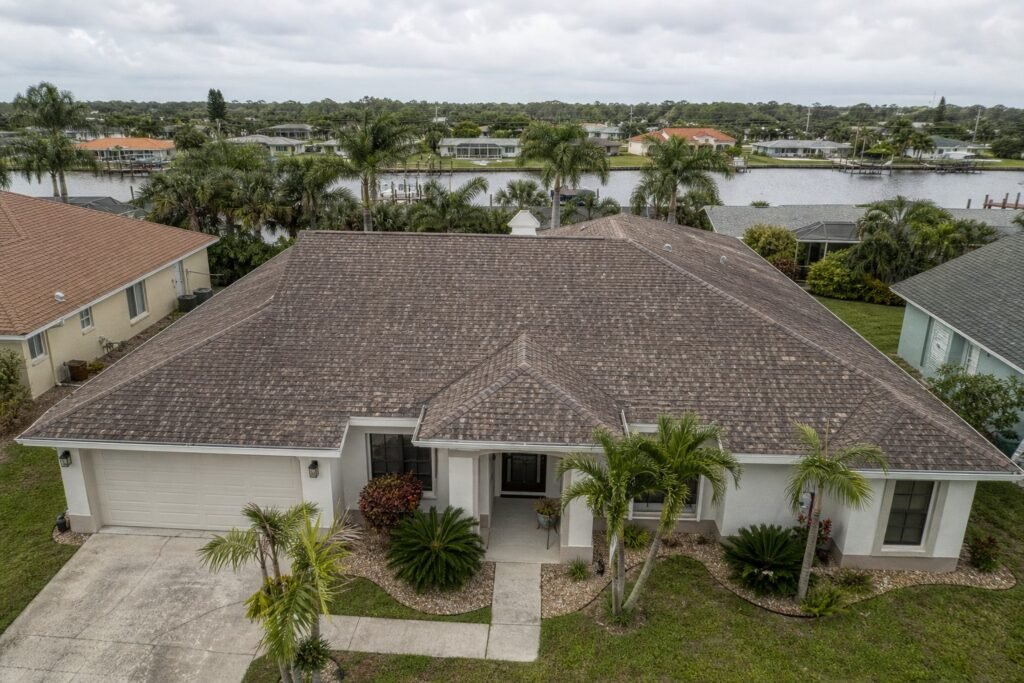
Published August 19, 2026 · Disclaimer: Insurance carrier policies, Florida statutes, and market conditions change frequently. The information below reflects current law and market conditions as of the publication date. Consult a licensed insurance agent for advice specific to your situation.
If you’ve owned a home in Hillsborough, Pasco or Pinellas County for more than a decade, you may have already gotten the letter — or you know someone who has. Your insurance carrier is non-renewing your homeowners policy, and when you read the fine print, the reason traces back to one thing: the age of your roof.
Across Tampa Bay, homeowners with roofs approaching or passing the 15-year mark are running into a wall. Private carriers that were happy to insure their homes five years ago are now declining to renew — forcing a scramble for coverage at significantly higher cost.
Here’s what’s actually happening, what Florida law says about it, and what you can do right now.
Why 15 Years Has Become the Magic Number
Most private insurance carriers in Florida have adopted internal underwriting guidelines that flag roofs at or around the 15-year mark. The logic is straightforward: an asphalt shingle roof in Florida’s heat, humidity, and hurricane environment degrades faster than the same roof in a northern state. By 15 years, many shingle roofs in the Tampa Bay area show visible wear — granule loss, curling edges, and weakened flashings that increase storm vulnerability.
According to OIR rate filings and carrier data, most private carriers now require roofs under 15 years old as a baseline for standard-market coverage. When your roof crosses that threshold, the number of carriers willing to quote your home can drop from the 10 to 15 typically available in Hillsborough County down to a handful.
This isn’t technically a “cancellation.” Carriers issue non-renewal notices at least 45 days before your policy expires, per Florida Statute 627.4133. But the practical effect is the same: you need to find new coverage, often at a much higher price.
What Florida Law Actually Says About Roof Age
Florida does have real protections against purely age-based non-renewals, and they’ve been on the books since the 2022 insurance reforms.
Florida Statute 627.7011(5)(b) states that an insurer may not refuse to issue or refuse to renew a homeowners policy on a residential structure with a roof that is less than 15 years old solely because of the age of the roof. Under 15? Age alone cannot be the reason you lose coverage.
For roofs 15 years and older, the protection shifts but doesn’t disappear. Under Section 627.7011(5)(c), before a carrier can require you to replace the roof as a condition of coverage, it must allow you to obtain a roof inspection at your expense. The inspection must be performed by an authorized inspector — a licensed roofing contractor, general contractor, home inspector, or professional engineer.
The critical threshold: if the inspection shows your roof has five or more years of remaining useful life, the insurer cannot refuse to issue or renew your policy solely because of the roof’s age.
The word “solely” matters. Carriers can still non-renew based on documented damage, maintenance issues, or code violations. But they cannot use a blanket age cutoff if your roof demonstrably has life left in it.
The Gap Between the Law and What’s Happening
If the statute protects homeowners, why are so many Tampa Bay residents still losing coverage over roof age?
First, many homeowners don’t know these protections exist. When a non-renewal notice arrives, the natural response is to start shopping rather than challenging the decision. Second, carriers have become sophisticated about framing non-renewals — citing “condition concerns” or “underwriting guidelines” that incorporate age alongside other factors, staying technically within the law while achieving the same outcome.
For homeowners in Brandon, Riverview, and Valrico — where housing stock from the early 2000s boom is now hitting the 20-to-25-year window — this isn’t an abstract policy debate. It’s showing up in mailboxes right now.
What a Non-Renewal Actually Costs You
Hillsborough County homeowners currently pay an average of roughly $3,500 per year for homeowners insurance, according to OIR’s January 2026 Property Insurance Stability Report. But that’s the county-wide average across all roof ages.
When you’re shopping with a 20-year-old roof, your options narrow. You may end up with a surplus-lines carrier at significantly higher premiums, or with Citizens Property Insurance — which has its own roof-age requirements. Citizens requires documentation of a full roof replacement for shingle roofs over 25 years old and tile, slate, or metal roofs over 50 years old, with exceptions for roofs that can demonstrate at least five years of remaining useful life.
On the flip side, homeowners who replace an aging roof typically see their annual premium drop by $800 to $2,200 and suddenly have access to a much wider pool of standard-market carriers.
Five Steps to Take Right Now
1. Get a roof inspection before you need one. Have a licensed roofing contractor evaluate your roof and document its remaining useful life in writing. If the report shows five-plus years, you have a statutory basis to challenge any age-based non-renewal. An inspection typically runs $150 to $300 in the Tampa Bay area — far less than the cost of being forced into a surplus-lines policy.
2. Get a current wind mitigation inspection. As of April 1, 2026, Florida requires the updated OIR-B1-1802 form. A current inspection can unlock credits that reduce the windstorm portion of your premium — often the largest slice of your bill.
3. Know your rights under 627.7011. If you receive a non-renewal citing roof age, request the specific reason in writing. If age is the sole reason and you have a qualifying inspection, present it to your carrier. If they won’t reconsider, file a complaint with the Florida Office of Insurance Regulation.
4. Work with an independent insurance agent. Independent agents shop across multiple carriers and are more likely to find one willing to write a policy on an older-but-sound roof. In Hillsborough County’s current market, the difference between an agent who shops 3 carriers and one who shops 15 can be thousands of dollars annually.
5. Plan your replacement strategically. If your roof is genuinely approaching end of life, August and September offer the best combination of contractor availability and competitive pricing in Tampa Bay. Replacing on your timeline — rather than after a non-renewal forces your hand — gives you leverage on price and scheduling.
The Bottom Line
The roof-age non-renewal wave isn’t a glitch — it’s how Florida’s private insurance market has evolved. Carriers are managing risk by shedding older roofs, and homeowners are bearing the cost. But Florida law gives you tools: a documented inspection, an understanding of your statutory rights, and a proactive approach to maintenance can keep you insured at reasonable rates.
If you’re not sure where your roof stands, start with an honest inspection. Brandon Roofing provides free roof inspections for homeowners in the Tampa Bay area — no obligation, no pressure. Call us at (813) 538-8200 to schedule yours before renewal season catches you off guard.