
Tampa Roof Replacement Financing Options
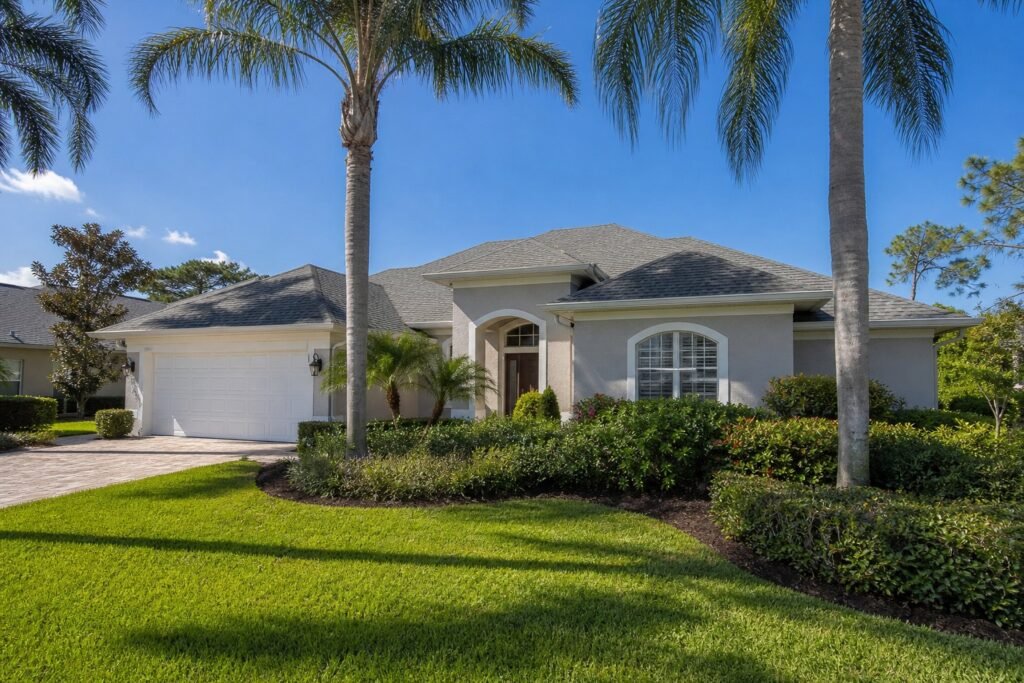
What Actually Makes Sense in 2026
Published August 17, 2026 · Disclaimer: Interest rates and program availability change frequently. Verify current rates with your lender before making financial decisions.
A full roof replacement in the Tampa Bay area runs between $14,000 and $18,000 for most 2,000-square-foot homes with architectural shingles — and that’s before you factor in deck repairs, code upgrades, or a jump to metal or tile. For homeowners in Brandon, Riverview, and Valrico, that price tag usually lands during the worst possible timing: your insurer is threatening non-renewal, hurricane season is active, and the roof can’t wait another year.
The good news is you have more financing options than you probably realize. The bad news is that the wrong one can cost you thousands in hidden fees or create problems when you eventually sell. Here’s a side-by-side comparison of the five most common ways Hillsborough County homeowners pay for a new roof in 2026 — with real numbers, real trade-offs, and the fine print most contractors won’t mention.
Option 1: Cash — The Simplest Path, If You Have It
Paying cash eliminates interest, fees, and monthly payments entirely. You keep your home’s equity untouched, avoid any lien complications, and have maximum negotiating leverage with your contractor — many roofers will offer a modest discount for cash payment because they avoid dealer fees and payment processing delays.
The downside is obvious: most homeowners don’t have $15,000 sitting in a savings account earmarked for a roof. And even those who do may prefer to keep that cash liquid during hurricane season, when emergency expenses can pile up fast. If you can comfortably pay cash without draining your emergency fund, it’s the lowest-cost option every time.
Option 2: Home Equity Loan or HELOC — The Lowest Interest Rates
If you’ve built up equity in your home, a home equity loan (HEL) or home equity line of credit (HELOC) typically offers the lowest interest rates of any financing option. As of August 2026, national average home equity loan rates sit around 8.10% to 8.26% APR depending on the term, according to Bankrate’s weekly survey. Florida credit unions often beat those averages — some local institutions are offering rates as low as 4.99% to 5.75% APR for first-lien products.
The key requirements: you generally need at least 15% to 20% equity in your home and a credit score above 680. Most lenders offer terms from 5 to 20 years, and the interest may be tax-deductible since it’s used for home improvement. A $15,000 home equity loan at 8% over 10 years works out to roughly $182 per month.
The trade-off is that you’re putting your home up as collateral. If your financial situation changes and you can’t make payments, your home is at risk. The approval process also takes two to six weeks, which can be a problem if your roof needs immediate attention.
Option 3: FHA Title I Property Improvement Loan — The Overlooked Option for Low-Equity Homeowners
This is the financing product most Tampa Bay homeowners have never heard of. The FHA Title I loan is a government-insured improvement loan specifically designed for home repairs, including roofing. The biggest advantage: you don’t need home equity to qualify. The FHA insures the loan against default, which lets lenders extend credit even when your equity position is thin.
Current rates range from roughly 6% to 11% APR with terms up to 20 years for single-family homes. The cap is $25,000, which covers most standard shingle reroofs in the Brandon and Riverview market but may fall short for metal, tile, or homes that need extensive deck work.
The catch: only FHA-approved Title I lenders can originate these loans, and not every bank or credit union participates. You can find approved lenders through HUD’s lender lookup tool online. There’s also a 1% FHA insurance premium on top of the lender’s rate. For homeowners who bought recently, put little down, or haven’t built significant equity, this is often the most cost-effective path.
Option 4: Contractor Financing — Convenient, But Read the Fine Print
Almost every major roofing estimate in 2026 comes with a financing offer attached. Companies like GreenSky, Service Finance, and Synchrony partner with contractors to offer what looks like an irresistible deal: “0% APR for 12 to 18 months” or low monthly payments spread over five to seven years.
Here’s what the estimate doesn’t tell you: those “0% APR” offers carry dealer fees of 8% to 12% that are built into your project cost. On a $15,000 reroof, that’s $1,200 to $1,800 in fees you’re paying without seeing them itemized. The contractor absorbs the fee from the financing company and passes it through in the bid price. In practice, you’re paying for the financing — it’s just hidden in the total cost rather than shown as interest.
The deferred-interest trap is the other risk. Many promotional offers are “deferred interest,” not “waived interest.” If you don’t pay the full balance before the promotional period ends, you owe all the accumulated interest retroactively — often at 22% to 26% APR. That can add $3,000 or more to a $15,000 balance overnight.
Contractor financing makes sense if you genuinely plan to pay the balance within the promotional window and you’ve compared the total bid price against what the same contractor would charge for a cash payment. Ask directly: “What’s the cash price versus the financed price?” A reputable roofer will give you a straight answer.
Option 5: PACE Financing — Available in Hillsborough County, But Complicated
Property Assessed Clean Energy (PACE) financing is unique to a handful of states, and Florida is one of them. PACE lets homeowners finance qualifying improvements — including hurricane-hardening roof replacements — through a special assessment on their property tax bill. Providers like Ygrene and Florida PACE operate in Hillsborough County.
The appeal is real: no credit score requirement, approval based on property equity and tax payment history, fixed rates around 6% to 8.5% APR, and terms up to 30 years. For homeowners who can’t qualify for traditional loans, PACE can be a genuine lifeline.
But there are significant trade-offs that every homeowner should understand before signing:
- It creates a tax lien. PACE financing sits on your property tax bill as a senior lien, meaning it takes priority over your mortgage. This can trigger complications — or outright objections — from your mortgage lender.
- Closing fees are steep. Expect approximately 6% to 7% of the loan amount in closing costs rolled into the financing total. On a $15,000 project, that’s roughly $1,000 in fees before interest.
- It can complicate a sale. When you sell your home, the PACE assessment transfers to the buyer unless paid off. Some buyers’ lenders won’t approve a mortgage with an existing PACE lien, which can narrow your buyer pool.
- Geographic limits. In Hillsborough County, PACE is currently available only in unincorporated areas. Communities like Brandon, Riverview, Valrico, and FishHawk are eligible, but properties within Tampa city limits are not.
A July 2026 state audit also flagged $3.7 million in PACE financing agreements issued without proper local government authorization in Orange County, raising broader questions about oversight. PACE isn’t inherently bad — but it requires more due diligence than a standard loan.
How to Compare: The Real Cost on a $15,000 Reroof
Here’s what each option actually costs over 10 years on a typical $15,000 architectural shingle replacement in Hillsborough County:
- Cash: $15,000 total. No interest, no fees.
- Home equity loan (8% APR, 10-year): ~$182/month, ~$21,800 total cost.
- FHA Title I (8% APR, 10-year): ~$185/month, ~$22,200 total cost (includes 1% FHA insurance premium).
- Contractor financing (0% promo, 18 months): $15,000+ if paid in full during promo; up to $24,000+ if deferred interest kicks in at 22% APR.
- PACE (7% APR, 15-year): ~$135/month, ~$24,300 total cost (includes ~$1,000 in closing fees).
The monthly payment on PACE looks attractive because of the longer term, but the total cost is the highest of the secured options. The home equity loan costs less overall but requires equity and a credit check. Cash is cheapest. There’s no free money — only different ways to spread the cost.
What Tampa Bay Homeowners Should Do Before Signing Anything
Before you commit to any financing for a roof replacement, take these steps:
- Get at least three roofing estimates. Compare both the project cost and any financing terms offered. Ask each contractor for a separate cash price.
- Check your home equity position. If you have 15% or more equity and decent credit, a home equity loan or HELOC will almost always beat contractor financing or PACE on total cost.
- Ask about deferred interest. If a contractor offers a 0% promotional rate, ask specifically: “Is this deferred interest or waived interest?” Get the answer in writing.
- Read the PACE disclosure carefully. If you’re considering PACE, understand the lien implications and discuss them with your mortgage lender before you apply.
- Check for utility rebates. TECO and Duke Energy offer rebates for certain energy-efficient roofing upgrades that can offset part of your cost regardless of how you finance the project.
Your roof is the most important structural component of your home — and in Hillsborough County, it’s also the single biggest factor in your insurance premiums. Financing it wisely means choosing the option that fits your financial situation, not the one your contractor’s sales pitch is built around.
If you’re weighing a roof replacement and want a straightforward estimate before you talk to a lender, call Brandon Roofing at (813) 538-8200 for a free inspection. We’ll tell you what your roof actually needs — no financing pitch attached.